By Analyst Team · Updated 2026-08-11 · 14 min read
Tired of rising cable bills and ninety-minute installation appointments? You’re not alone. An ip-tv provider is the alternative that millions of cord-cutters now use to stream live channels, sports, movies, and series over a simple internet connection. In this complete guide, I’ll explain what an ip-tv provider is, how the technology delivers video to your screen, which benefits are real, which limitations are real, and how to evaluate a service before you spend a cent. You’ll also find a direct comparison between iptv services and classic cable, plus a practical setup plan that works even if you’re not especially tech-savvy. The image above gives you the essential idea: live television and on-demand content arrive through your broadband router instead of a satellite dish or a legacy cable socket.
LIMITED TIME AVAILABILITY
Unlock Full ip-tv provider Access
Secure special promotional rates instantly before the window closes. Lock in your pricing model today before plans return to standard regional metrics.
What is an ip-tv provider exactly?
IPTV stands for Internet Protocol Television. An ip-tv provider is a service that transmits live TV and on-demand video over the internet using IP packets, instead of broadcasting through radio waves, coaxial lines, or satellite dishes. In plain English: your broadband connection becomes the “cable,” and the channel lineup is delivered as data — just like Netflix or YouTube traffic.
Modern subscriptions usually include much more than live channels. A good ip-tv provider also provides an Electronic Program Guide (EPG), catch-up television for missed programs, a video-on-demand library, multi-device activation, and often customer dashboards for managing devices remotely. The best services bundle these features into one clean app experience, so you don’t need a separate DVR or a second streaming box.
It’s equally important to separate licensed services from unlicensed ones. A legal ip-tv provider negotiates rights with broadcasters and follows local regulations. An unlicensed seller typically resells scraped streams, which is why suspiciously cheap subscriptions tend to disappear in the middle of a season. If you search “where to buy iptv legally,” you’ll notice that the credible names have transparent billing, public websites, and clear licensing information.
How it works step by step
The setup looks complicated at first, but once you’ve done it, it takes less time than configuring a smart light bulb. Here is exactly how the process works with virtually any iptv service:
1. Subscribe to the provider. Choose a plan and complete the payment. You will immediately receive an M3U playlist, a portal URL, or an activation code.
2. Install a player app. The most common apps are IPTV Smarters, TiviMate, GSE Smart IPTV, and IBO Player. Many providers also offer a custom-branded app that simplifies everything.
3. Enter your credentials. Paste the M3U link or portal address into the app. The provider’s server then delivers the full channel list to your screen automatically.
4. Let the EPG load. The electronic program guide populates with channel names, logos, and schedules. This usually takes a few seconds on a good connection.
5. Pick a channel and watch. Video is sent in small data packets and decoded in real time. On solid broadband, the stream opens in one or two seconds.
6. Repeat on other devices. If your subscription allows simultaneous connections, you can install the same app on your phone, TV, and laptop without paying again.
This architecture is also the reason an ip-tv provider can offer thousands of channels: the channel count is not limited by physical frequencies or dish capacity, only by server bandwidth and licensing agreements.
Concrete benefits for your daily viewing
Switching from cable to a high-quality ip-tv provider isn’t just about saving money, although that’s often the first advantage people notice. Here are the concrete benefits that show up in day-to-day use:
- Cost savings. Most respectable iptv subscriptions cost between $8 and $20 per month, compared to $50–$120 for traditional cable packages.
- Enormous channel choices. Many providers offer 10,000+ channels, including international news, niche sports, kids’ programming, and regional stations.
- Device flexibility. Watch on smart TVs, Firesticks, Android boxes, iOS/Android phones, tablets, and PC/Mac browsers.
- Video-on-demand libraries. Full movies and entire series are often included, which removes the need for a second streaming app.
- Instant activation. No technician visits, no long-term commitment on many plans, and no waiting for a cable box to arrive.
- Portability. Use the same account at home, in a hotel, or even abroad when IP-location features allow it.
Honest limitations you should know
A reputable ip-tv provider changes how you watch television, but it’s not a magic product. The limitations are real and you should evaluate them honestly before subscribing.
- Internet dependence. A stable 25 Mbps connection is the practical minimum for full HD; 4K streams often prefer 50 Mbps or more. Weak Wi-Fi and peak-hour congestion cause buffering.
- Legal gray zones. Many sellers are not authorized distributors. Always check whether the provider holds broadcast rights and whether the service is accepted in your country.
- Inconsistent support. Friendly 24/7 live chat is rare. Some services only reply via ticket, and response times vary wildly.
- EPG inaccuracies. Guide names and start times can be wrong, especially for niche channels, catch-up, and international feeds.
- Security risks. Free and unknown services can log your data or inject ads. Stick with verified providers and consider using a VPN for privacy.
Pros and cons at a glance
Pros
- Drastically lower monthly cost
- Vast live TV and VOD catalog
- Watch on almost any screen
- No technicians or installation fees
- Perfect for expats and sports fans
Cons
- Buffering depends on your internet speed
- Legal status varies by service
- Support is often slow
- EPG data is not always accurate
- Gray-market sellers can shut down anytime
IPTV service vs cable TV and other alternatives
The table below compares an iptv service with cable television, satellite, and mainstream streaming bundles. Use it to decide which model actually fits your household budget and viewing habits.
| Feature | ip-tv provider | Cable TV | Satellite TV | Streaming Bundles |
|---|---|---|---|---|
| Monthly cost | $8–$20 | $50–$120 | $60–$150 | $30–$90 |
| Channel count | 1,000–20,000 | 100–300 | 150–400 | Varies, 50–200 |
| Stream quality | Up to 4K | Up to 1080p | Up to 4K/HDR | Up to 4K |
| Internet required | Yes, 25+ Mbps | No | No | Yes |
| Installation | Self-managed app | Technician visit | Professional setup | Self-setup |
| Contract flexibility | No contract | 12–24 months | 12–24 months | Month-to-month or annual |
| Device flexibility | Very high | Limited to TV | Limited to TV | High |
| VOD library | Large on many services | Limited rental channels | Smaller | Large |
| Reliability | Depends on provider | High | High | High |
Who is an ip-tv provider really for?
An ip-tv provider is not a universal replacement for cable. It’s the ideal solution for a specific set of situations — and knowing which one you’re in will help you pick the right subscription length and plan type.
- Cord-cutters who want to cancel a $90 cable package without losing live news and sports.
- Sports fans who need an ip-tv provider for sports with multiple leagues, international feeds, and 4K games.
- Expats and diaspora communities who want channels from their home country and can’t find them on mainstream platforms.
- Budget-conscious families who want a single low-cost subscription for all devices.
- Travelers and remote workers who want the same channel lineup in a hotel, cabin, or second home.
- Binge-watchers who enjoy large VOD libraries without paying for three separate apps.
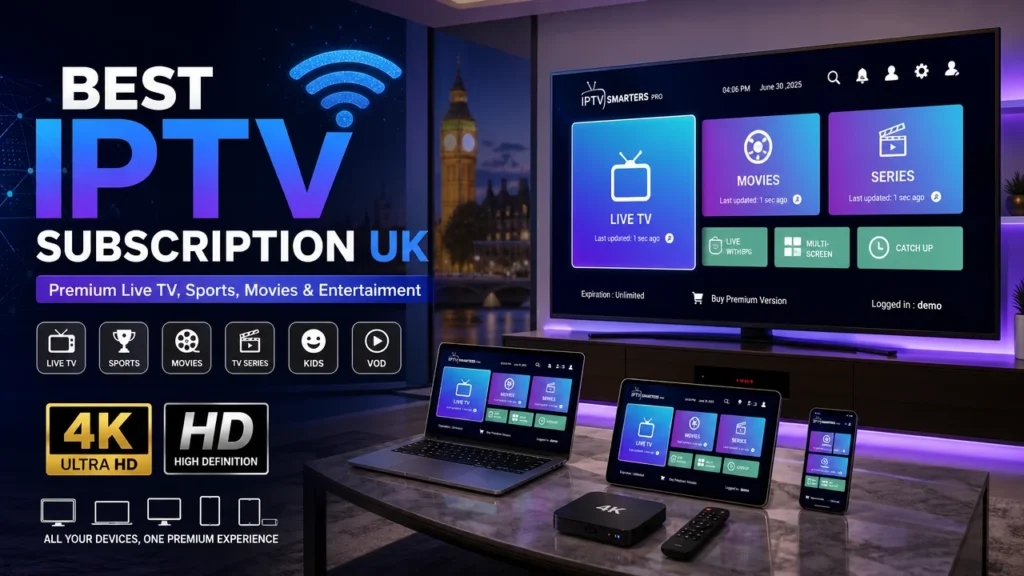
Sports fans often look at the premium 4K streams shown above, but the real test is whether the service holds the connection during a Saturday evening peak. If a provider can deliver a full match, in 4K, without freezing when thousands of people are watching the same game, that’s a strong indicator of serious infrastructure.
Unlock complete high-definition information and priority access packs.
Claim This Special Offer for ip-tv provider →How to get started — practical numbered steps
Use this checklist to avoid scams and wasted money. The process looks simple, but the quality difference between providers becomes obvious when you follow these steps properly.
- Test your internet speed. Run a real speed test on the TV or device you plan to use. You want at least 25 Mbps for comfortable full HD viewing, and 50+ Mbps for 4K on multiple screens.
- List the channels you actually watch. Local news, football leagues, kids’ channels, entertainment networks — write them down. That list becomes your “must have” filter when comparing providers.
- Read independent reviews. Search for “best ip-tv provider 2026” and look for real user feedback. The phrase “ip-tv provider reviews Reddit” works for honest complaints, but beware that some posts are posted by sellers themselves.
- Start with a trial or a 1-month plan. Never buy a 1-year subscription before testing the service during a full week of normal viewing.
- Install a popular player. IPTV Smarters, TiviMate, and GSE Smart IPTV are stable choices that work across TV, phone, and tablet.
- Check the EPG manually. Look at a few channels you know, verify that the program names match reality, and note if catch-up TV is available for your favorite shows.
- Watch during peak hours. Friday and Saturday evenings are the true stress test. If the stream holds steady then, the provider probably has solid server capacity.
- Only then upgrade. Once a provider has passed a week of testing, you can safely move to a quarterly or annual plan and often unlock a better price.
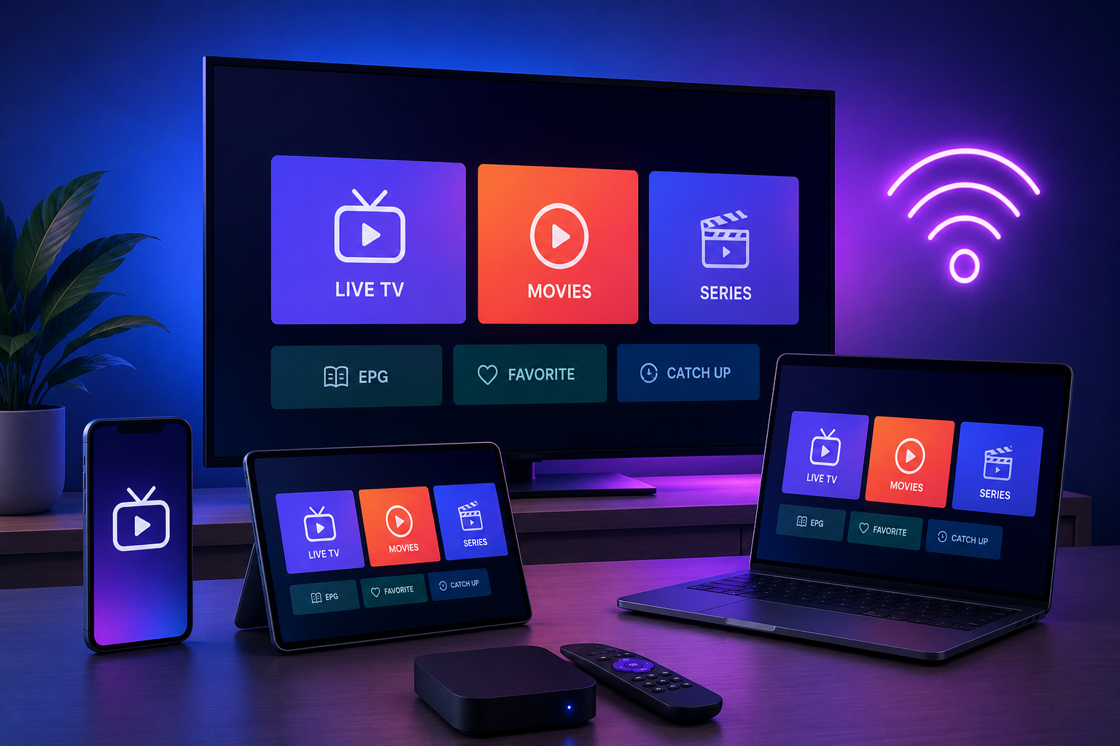
The diagram above shows why an iptv service is so popular with households: one subscription, three screens, and the same live channel grid on all of them. This multi-device flexibility is the practical reason why many users never return to cable, even after a period of skepticism.
Conclusion — the smart way to choose an ip-tv provider
An ip-tv provider can genuinely replace cable, but only if you match the service to your internet quality, the channels you need, and your tolerance for the provider churn that still exists in this market. Start small, test during peak hours, and support providers that are transparent about licensing and uptime. The best strategy is simple: try before you buy, and never commit to a long plan after only five minutes of channel surfing.
If you want a curated starting point, the official offer featured on this page comes from a provider we monitor for connection uptime and genuine customer support. You can compare the current plan details and verify live availability through the secure link below — there’s no obligation to upgrade until you’ve tested the service yourself.
Final Subscription Window:
Main Offer Today →Affiliate Disclosure: Clicking this secure link verified by our network supports our team through standard partnership terms at zero extra cost to your invoice.
Frequently Asked Questions
1. Is an ip-tv provider legal in 2026?
IPTV technology itself is perfectly legal. Whether the provider operates legally depends on whether it holds rights to distribute the channels and films it offers. Licensed providers operate openly and pay broadcasters; unlicensed resellers do not. Always review a provider’s terms, payment pages, and user reviews that mention stability before subscribing.
2. How do I choose a reliable ip-tv provider without buffering?
Reliability hinges on server infrastructure and your own connection. Look for providers with multiple server locations, proper CDN support, and actual user reports of stable streams. Search “reliable ip-tv provider no buffering” and read recent threads; older recommendations are often outdated because providers change hands quickly online.
3. Which is the best ip-tv provider for sports?
The best ip-tv provider for sports offers dedicated sports sections, multiple feeds for the same match in different languages, 4K channels, and low-latency streaming. Serious viewers also insist on accurate EPG data for kickoff times. Many communities on Reddit recommend providers that offer free trials on matchday, so you can verify the stream doesn’t freeze during peak traffic.
4. Where can I buy iptv legally and avoid scams?
“Where to buy iptv legally” is one of the most common questions on streaming forums. Your safest route is a provider with transparent billing, a public website, and an identifiable company behind the service. Avoid sellers that only accept cryptocurrency and never reveal a physical address or support contact.
5. What is the cheapest ip-tv subscription that is still worth it?
Cheapest and best are different things. Some services sell 1–2 euro tests that last 24 hours; those are useful for testing, not for daily use. The cheapest serious plan is usually between $8 and $15 per month. If you see lifetime packages for $20, treat them as red flags — they rarely last more than a few months.
6. Are ip-tv provider reviews on Reddit reliable?
Reddit is a double-edged sword. Real users share honest experiences, but there are paid shills and provider employees who pretend to be customers. Search relevant subreddits, look at the comment history of reviewers, and be suspicious of accounts that always recommend the same site. Use Reddit as a first filter, not as the final verdict.
7. Can I use one ip-tv subscription on multiple devices?
Most providers allow one or two simultaneous connections per subscription; some premium plans allow four. Check the terms before subscribing. Apps like IPTV Smarters let family members log in on separate devices, but if multiple users stream 4K at once, the provider may throttle the connection or block the IP.
8. Does an iptv service work on smart TVs without extra hardware?
Yes, most modern smart TVs support IPTV apps such as Smarters, TiviMate, and other Android TV players. You only need to install the app, enter your login credentials, and connect to the internet. Older TVs without an app store are limited — for those, a Fire Stick or Android box is worth the extra $20–50 investment.